A great road trip is rarely remembered for arriving exactly on time. It is remembered for the song that became the soundtrack of the journey, the chai stall that appeared at the perfect moment, the view you almost drove past, and the conversation that only happened because everyone had nowhere else to be.
That does not mean a memorable trip has to be chaotic. In fact, the best ones are usually built on a simple balance: plan the essentials, then leave enough space for the journey to surprise you. Whether you are driving through the Western Ghats, along the Konkan coast, across Rajasthan, or toward the Himalayas, this is how to make the drive feel as valuable as the destination.
What actually stays with you after a road trip?
Landmarks are wonderful, but they are often not the first memories that return. The small sensory details last longer: rain on the windscreen, warm idli-vada at a highway stop, a sleepy town waking up, a shared joke that becomes funnier with every retelling, and the changing light on a road that seems to go on forever.
Memorable trips create a feeling of being present. That happens when you are not racing through a checklist. You notice the road, the people travelling with you, and the places between the places. The destination may give the trip a purpose; the in-between moments give it a story.
Choose roads that create contrast
The fastest route is not always the one you will remember. A memorable drive often has a sense of change: a broad highway narrowing into a village lane, a dry plain giving way to hills, or a forest clearing suddenly revealing a valley. Contrast makes the journey feel like movement, not just transport.
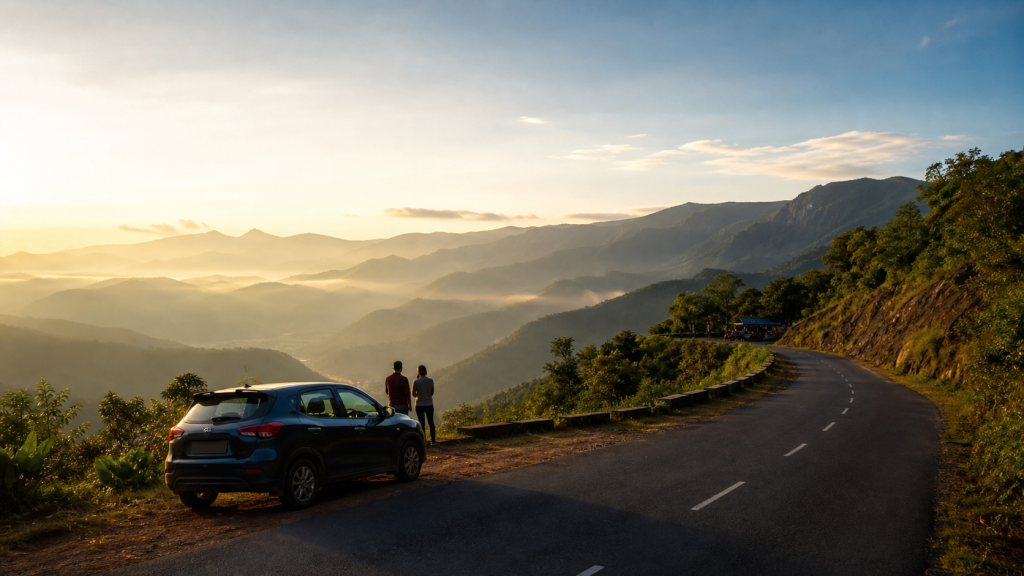
- Mountain roads: Hairpin bends, cool air, valleys, tea gardens, and changing weather make hill drives vivid. They also demand patience; drive in daylight where possible and never treat a scenic road as a race.
- Coastal roads: The sea appearing between palms, fishing villages, salt air, and sunset stops give coastal routes an easy rhythm.
- Forest and ghat roads: Tree cover, filtered light, birdsong, and occasional mist create atmosphere. Keep your speed low and respect protected-area rules and wildlife crossings.
- Old highways and small-town routes: These are where hand-painted signs, local markets, temples, bakeries, and modest dhabas often make the best stops.
- Open plateau or desert roads: Long horizons can be unexpectedly moving. They are beautiful precisely because they make you feel small and unhurried.
Choose the route for what it offers, not just the arrival time. A detour is worth considering when it gives you a safer, more interesting landscape or a place you genuinely want to explore—not merely another pin on a map.
Make room for good surprises
Unpredictability matters because surprise gives a trip its own character. A planned stop can be excellent, but an unplanned waterfall, local festival, roadside fruit stand, or unexpected viewpoint becomes something you discovered for yourself. It cannot be reproduced exactly, which is why it stays vivid.
The important distinction is between flexibility and chaos. Good surprises cost a little time; they should never cost safety. Do not follow an interesting sign down an unfamiliar road if it is getting dark, fuel is low, the weather is deteriorating, or you do not have a clear route back. A beautiful journey needs a calm driver more than it needs one more detour.
A simple formula: fixed bones, flexible texture
- Fix the non-negotiables: travel dates, overnight stays, budget, vehicle readiness, fuel plan, and a safe primary route.
- Choose only one or two must-do stops each day.
- Protect a two- to three-hour buffer for food, views, traffic, weather, and discoveries.
- Save optional stops rather than scheduling them all.
- Keep a backup for rain, road closures, fatigue, and late arrival.
That buffer is not wasted time. It is where the trip becomes yours.
Use tools without letting them run the trip
For road trips in India, a small toolkit is enough. Use Google Maps as your main navigation and shared place-saving tool; download offline maps before entering weak-signal areas. Keep Mappls as a useful India-specific cross-check for detailed addresses, lanes, tolls, and alternate local routing. Use a weather app—especially in the hills, during monsoon, and along the coast—to decide whether a detour is sensible. For national highways, check traveller-support and toll information through official NHAI services such as Rajmargyatra.
For discovery, build one shared Google Maps list titled “Maybe.” Add viewpoints, local food, markets, short walks, lakes, museums, and places recommended by friends or travel communities such as Tripoto. Do not turn every saved place into an obligation. Think of the list as a menu: when you have time, energy, and good weather, pick the one that feels right.
Technology should remove uncertainty around safety, not remove all spontaneity from the day.
Eat in a way that makes the road better
Food is one of the easiest ways to remember where you have been. The best road-trip meals are not necessarily elaborate; they are fresh, local, easy to enjoy, and attached to a pause in the journey. A roadside chai in the rain, filter coffee before an early start, hot poha, parathas, idli-vada, a regional thali, or dal-roti at a dependable dhaba can become part of the place itself.
Keep a practical car stash too: drinking water, fruit, nuts, biscuits, simple sandwiches, and electrolyte packets. Stop for heavy or spicy meals rather than eating while driving, and choose places that look busy, clean, and freshly prepared. A proper meal stop resets everyone’s energy—and often leads to the best conversation of the day.
Music, conversation, and silence
Play music, but do not fill every kilometre with it. Build a shared playlist before you leave, then let it evolve as the trip does. The song that plays on a rainy ghat road or during a sunset stop may become inseparable from the journey years later.
Just as important is knowing when to turn it down. Keep the volume low enough for the driver to hear navigation, traffic, and anything unusual. Switch it off for a great view, during a difficult stretch, or when the car naturally falls into a real conversation. Comfortable silence is not a gap to fix; on a long drive, it is often a sign that everyone is at ease.
If conversation needs a nudge, skip the interview-style questions and try prompts that invite stories: What place from childhood would you like to see again? What is the strangest job you would try for one month? What would you do with an extra day and no obligations? Which person changed your life without realising it? Or simply ask: if we stopped here and started over, what would we do?
Create small rituals
Rituals turn a drive into a shared experience. Let each person choose one surprise stop during the trip. Take one unhurried tea or coffee break every day. Try one local speciality. Watch one sunset without looking at a screen. At the end of the day, name the best moment and the funniest moment.
These things sound small because they are small. That is their strength: they fit around the journey instead of turning it into another project to manage.
Keep the trip safe enough to enjoy
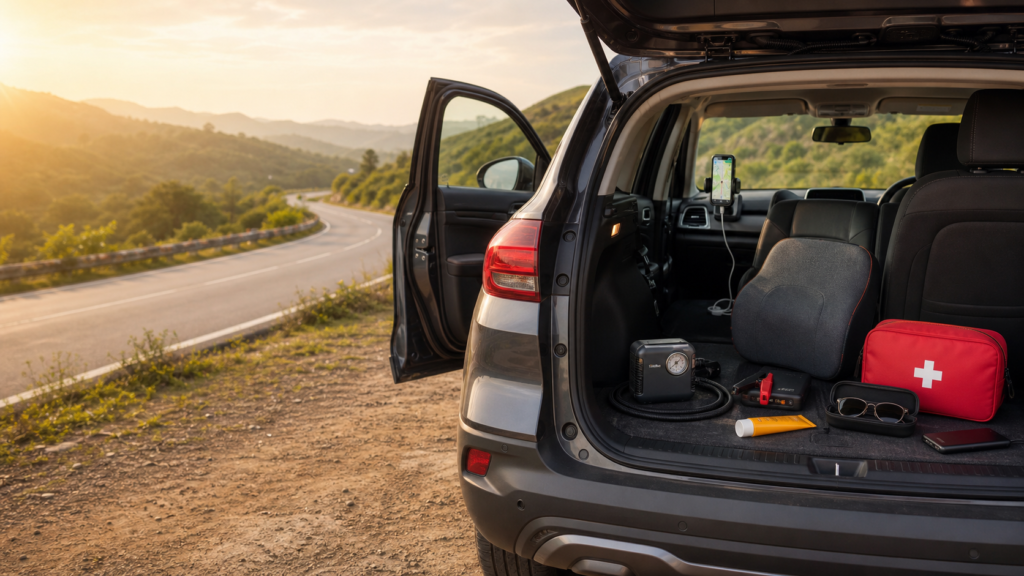
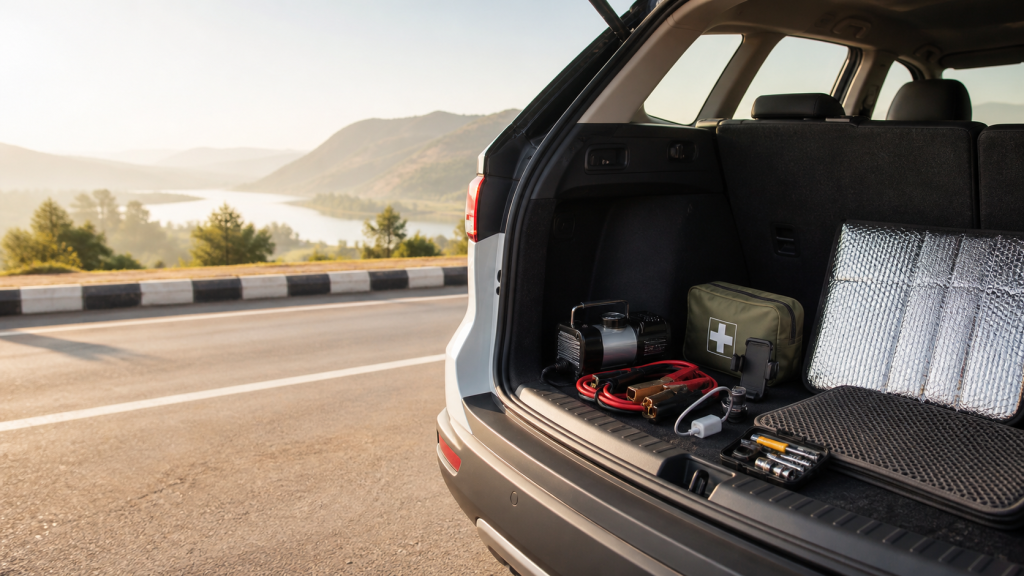
No view is worth driving tired, rushing through bad weather, or pushing a vehicle beyond its limits. Start with a basic vehicle check, carry water and a charging cable, keep enough fuel for remote stretches, and share your route and overnight details with someone you trust. In the mountains or monsoon, start early, avoid unnecessary night driving, and watch official local advisories.
Also look after the mood inside the car. Take breaks before people get irritable, rotate driving only if everyone is comfortable and insured to do so, and be willing to skip a stop when energy is low. The best road-trip decision is often the one that leaves you rested enough to enjoy tomorrow.
Document lightly, remember deeply
Take photographs, but do not turn every stop into a photoshoot. A few frames, one short voice note, a note about a meal, or a saved playlist is usually enough to bring the feeling back later. You do not need proof of every beautiful moment; you need to have been there for it.
In the end, a road trip becomes worth it when the journey stops feeling like the gap between two places. Pick a route with character, protect time for detours, eat somewhere local, play the right song, talk when there is something to say, and let the road occasionally lead. The destination will be there when you arrive. The story is what happens on the way.