Dashcams have become one of the most useful accessories a car owner can buy in India. They can provide an impartial record after an accident, capture unsafe driving, help explain disputed insurance claims, and document parking damage. But the market is full of confusing labels: 4K, HDR, STARVIS, parking mode, GPS, dual-channel, battery, capacitor, Wi-Fi, ADAS and more. The result is that many buyers either overspend on features they will never use or buy the cheapest camera and discover its limitations only when they need footage most.
This guide brings together the key decisions a buyer should make before purchasing a dashcam in India. It covers budget ranges, the most dependable brands, the best mobile-app experience, front-only versus front-and-rear recording, heat tolerance, parking mode, and the memory card you should buy alongside the camera. It also includes a practical ranking so you can choose without getting lost in specifications.
Quick Answer: Which Dashcam Should You Buy?
For a simple and sensible front-only setup, the 70mai M200 is the strongest budget pick. It is compact, has a reputable Sony STARVIS 2 sensor, supports app connectivity, and delivers the kind of clear everyday footage most drivers need.
If you want both front and rear coverage, the 70mai A200 Dual is the value choice. It is more expensive than a basic front camera, but rear coverage can be very useful for rear-end collisions, hit-and-run situations, and incidents while the car is parked.
For buyers willing to spend more for stronger night performance, GPS and a more capable dual-channel setup, the 70mai A510 Dual is a compelling upgrade. For premium buyers who place camera quality and long-term hardware reputation above price, VIOFO deserves serious consideration.
Dashcam Rankings for India
| Rank | Dashcam | Best for | Approximate all-in budget |
|---|---|---|---|
| 1 | 70mai M200 | Best budget front-only dashcam | ₹5,000–₹6,500 |
| 2 | 70mai A200 Dual | Best value front-and-rear setup | ₹8,000–₹10,000 |
| 3 | 70mai A510 Dual | Best mid-range night footage and features | ₹13,000–₹15,000 |
| 4 | VIOFO A119 Mini 2 / VIOFO A229 series | Best premium reliability and image-quality option | ₹10,000+ / ₹25,000+ |
| 5 | Qubo Pro X | Good India-focused front-only alternative | ₹5,000–₹6,500 |
| 6 | DDPAI Mini Pro | Alternative budget front-only option | ₹4,000–₹6,000 |
All-in budgets include an estimated ₹1,000–₹1,600 for a 128GB high-endurance microSD card. Professional installation, hardwiring kits, and parking-mode accessories may cost extra. Retail pricing changes frequently, so treat these as useful shopping ranges rather than fixed prices.
What Is a Good Value-for-Money Dashcam Price Range?
The best value-for-money range for a dashcam in India is usually between ₹5,000 and ₹9,000 for a front-only camera, including a proper memory card. In this bracket, you can expect a reputable brand, Wi-Fi/app access, loop recording, impact detection, and footage that is good enough for everyday evidence. A high-quality sensor and usable night performance matter more than a long list of gimmicks.
For front-and-rear coverage, the value sweet spot moves to roughly ₹9,000–₹14,000 after accounting for the memory card and installation. This is the range where you begin to see better image sensors, more dependable rear-camera recording, GPS, and improved parking features. Spending beyond ₹15,000 can make sense, but the improvement is mostly in night footage, native 4K, advanced parking recording, faster Wi-Fi, and better rear-camera quality rather than the basic ability to record an incident.
Below ₹4,000, be careful. Some entry-level cameras can work, but cheap no-name products often compromise on low-light footage, heat durability, app stability, or warranty support. A dashcam is one of those products where buying from a known brand is worth the small extra cost. The camera may be needed only once, but that one recording can be far more valuable than the price difference.
Front-Only vs Dual-Channel Dashcams: Which One Is Right for You?
Front-only dashcams
A front-only camera records the road ahead and is the best choice when your budget is limited. Most accidents, road-rage incidents, unsafe overtakes, and disputed right-of-way situations happen in front of the car. A good front camera with a better sensor often delivers more useful evidence than a very cheap dual-camera model.
Choose a front-only dashcam if you drive mainly in the city, want a discreet installation, do not need cabin coverage, and would rather spend your money on better night quality and a reliable memory card. The 70mai M200 fits this category well.
Dual-channel dashcams
A dual-channel dashcam adds a rear camera. It gives a more complete account of a collision and is particularly useful if you frequently drive on highways, park on public roads, use your car for long trips, or want evidence of tailgating and rear-end incidents. Rear-camera footage may not always capture number plates at a distance, but it provides important context about what happened behind the vehicle.
Choose a dual-channel system if your total budget allows for it. The 70mai A200 Dual is the practical entry point, while the 70mai A510 Dual is better for buyers who value stronger night footage and additional features.
The Most Important Features to Check Before Buying
1. Image sensor and HDR
Do not decide based on the phrase “4K” alone. A native 2K or 1080p camera with a good sensor and HDR can produce more useful footage than an inexpensive camera advertising upscaled 4K. Look for models that clearly state the sensor they use, especially Sony STARVIS or STARVIS 2 sensors. These are widely valued for low-light capability, which matters when you need to read a plate at dusk, in rain, or under harsh headlight glare.
HDR is equally important. It balances very bright headlights and darker road areas, helping the camera preserve more detail in challenging scenes. Before buying, search for unedited day and night sample videos from the exact model you are considering. Pay attention to moving number plates, not just a stationary car parked in ideal lighting.
2. Heat tolerance for Indian summers
Indian weather is hard on electronics mounted on a windscreen. The cabin can become far hotter than the outdoor temperature when a car is parked in direct sunlight. If your vehicle regularly sits outside in peak summer, ask whether the dashcam uses a lithium battery or a supercapacitor. Supercapacitors are generally better suited to high heat because they are designed to handle temperature stress and provide enough stored power to save the last file when the car switches off.
This is not a reason to reject every battery-based model, but it is a genuine consideration. Battery-based units from established brands can still offer excellent performance. The sensible approach is to buy from an authorised seller, keep the firmware current, and make heat tolerance part of your comparison—especially in cities with extreme summer temperatures.
3. Loop recording and G-sensor
Loop recording is essential. It means the dashcam automatically overwrites the oldest ordinary clips when storage fills up, so you do not need to manually delete files every week. A G-sensor detects a sudden impact and locks the relevant clip to reduce the chance of it being overwritten.
Set the G-sensor sensitivity sensibly after installation. If it is too sensitive, potholes and speed breakers can cause the camera to lock too many clips. If it is too insensitive, a smaller collision may not be marked. Review the settings after a few days of driving.
4. Parking mode and hardwiring
Parking mode can record a collision or movement while your car is switched off. It is useful, but it is not truly plug-and-play on most vehicles. For reliable parking mode, you normally need a hardwiring kit or an OBD power kit. The kit should include low-voltage battery protection, which shuts down the camera before it drains your car battery too far.
Do not buy a dashcam just because the box says “parking mode.” Confirm whether the required kit is included, whether the installer understands your car’s wiring, and whether the recording mode is buffered. Buffered parking mode can preserve footage from a few seconds before an impact; basic motion detection may start recording only after movement is detected.
5. GPS and privacy controls
GPS can record the vehicle’s location and speed alongside video. It can be helpful as supporting evidence, particularly on highways or unfamiliar routes. However, some drivers prefer not to display speed or location data in clips they share. Choose a camera that lets you turn GPS logging or the on-screen speed stamp off when desired.
6. Field of view
A viewing angle around 130 to 150 degrees is generally practical. Too narrow and the camera can miss action at the sides of an intersection; too wide and the image may become distorted, making distant details smaller. A wide angle is useful, but it should never be the only factor in a buying decision.
Which Dashcam Brand Is Most Reliable in India?
70mai is the safest all-round brand recommendation for most Indian buyers. It offers a broad product range, competitive pricing, straightforward installation, solid image sensors on its better models, and a mobile app that is easier to use than many alternatives. It is particularly strong for buyers in the budget and mid-range categories.
VIOFO is the better choice for buyers who want premium image quality, extensive configuration, and a specialist dashcam brand reputation. It generally costs more, and its app is functional rather than especially polished, but its higher-end models are well regarded by serious dashcam users.
DDPAI makes credible value-oriented products and is worth considering when a particular model is discounted. Qubo can appeal to buyers who prefer an India-focused brand and local support presence. However, compare the actual sensor, night video, and recent app feedback before making a choice. Avoid making any brand decision based solely on marketing claims or marketplace star ratings.
Which Dashcam Has the Best Mobile App?
Among commonly available value brands, 70mai is the strongest choice when the mobile app matters. The app is usually straightforward for connecting over Wi-Fi, watching a live view, changing settings, reviewing clips, and downloading footage after an incident. This is more important than it may seem: in a stressful situation, you want to find and save a video quickly rather than remove the memory card and search through folders.
VIOFO offers deeper configuration for users who like to fine-tune bitrate, parking mode, video settings, GPS and sensors. But for a first-time owner, 70mai’s simpler workflow is often more convenient. Whichever brand you choose, test the app on your own phone immediately after installation, download a sample clip, and learn how to lock an event manually.
Memory Cards: Do Not Treat This as an Optional Expense
A dashcam without a reliable memory card is not a reliable dashcam. Unlike a phone, a dashcam writes video continuously, often for hours at a time, then overwrites it and repeats the process. Standard microSD cards designed for occasional phone or camera use can wear out much faster under this workload. A card may appear to work normally until the day it silently stops saving new clips.
Always account for memory-card money in your budget. A good high-endurance 128GB microSD card typically adds around ₹1,000 to ₹1,600, but it is a far better investment than buying a cheaper standard card. After installing it, format the card in the dashcam itself and check recordings every month or two.
Recommended memory-card size
- 64GB: Acceptable for a basic front-only 1080p camera. It fills relatively quickly and is best for light use.
- 128GB: The recommended size for most buyers. It is ideal for front-and-rear recording, HDR, 2K recording, frequent driving, and occasional parking mode.
- 256GB: Useful for 4K cameras, long-distance travel, taxi or commercial use, and extensive parking recording. Buy it only after confirming the dashcam officially supports 256GB.
For example, the 70mai A200 officially supports cards from 32GB to 128GB, making a 128GB card the sensible maximum choice for that model. Do not assume every dashcam can handle 256GB simply because newer phones can.
Recommended memory-card brands
The safest recommendations are the Samsung PRO Endurance microSD card, the SanDisk High Endurance microSD card, and the SanDisk Max Endurance microSD card. These cards are built for continuous recording applications such as dashcams, security cameras, and surveillance systems.
Purchase memory cards only from an authorised retailer or a verified marketplace seller. Fake memory cards are common, especially when an offer looks unusually cheap. A counterfeit card may falsely report a large capacity, then overwrite or corrupt footage when it reaches its real limit. If possible, test a newly purchased card during the return period and retain the invoice.
Memory-card maintenance tips
- Format the card in the dashcam before first use.
- Use only a high-endurance card from a trusted seller.
- Check that recent clips are actually saving every one to two months.
- Replace the card if the dashcam reports write errors, random restarts, missing recordings, or repeated formatting prompts.
- Back up important incident footage immediately; a locked file is not a permanent archive.
Installation Tips
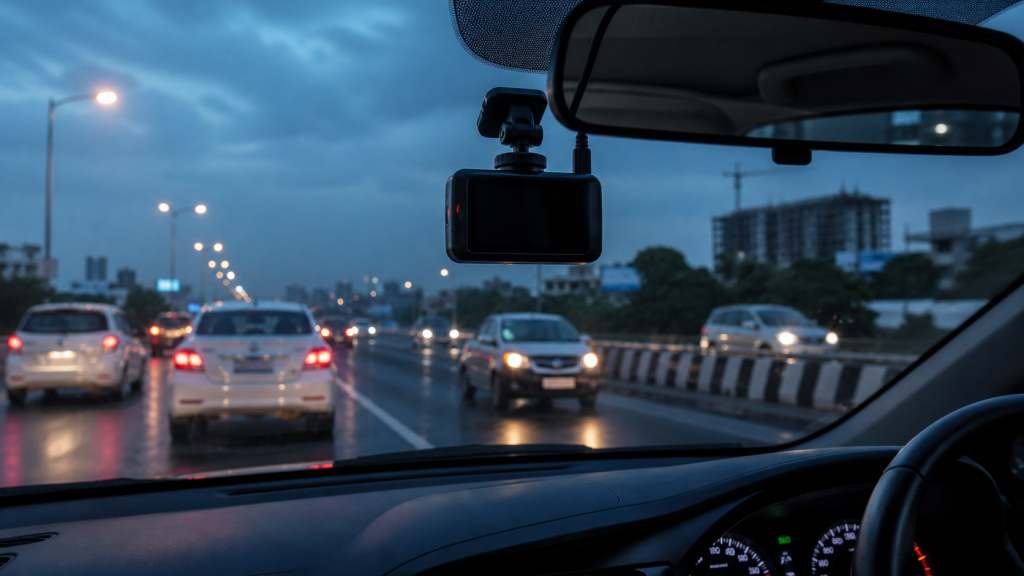
Mount the front camera high on the windscreen, ideally behind or close to the rear-view mirror, without obstructing the driver’s view. Keep the lens inside the wiper sweep area so rain and dust do not make footage unusable. Aim the camera so the horizon is roughly in the middle of the frame; too much dashboard or sky wastes the frame.
For a rear camera, route the cable cleanly through the headliner and door seals. If your vehicle has side-curtain airbags, make sure the cable does not interfere with them. A competent installer can hide cables without cutting factory wiring. If you want parking mode, ask specifically for a hardwire kit with low-voltage protection and test it after the installation is complete.
Final Buying Advice
The best dashcam is the one that reliably records clear footage every time you drive. Do not overfocus on fancy features while overlooking the essentials: a good image sensor, usable night performance, a known brand, an easy app, a correctly installed camera, and a high-endurance memory card.
If you want the lowest sensible budget setup, buy the 70mai M200 with a 128GB Samsung PRO Endurance or 128GB SanDisk High Endurance card. If rear coverage matters, step up to the 70mai A200 Dual with the same type of card. If your budget is closer to ₹15,000 and night footage is important, consider the 70mai A510 Dual, while keeping its heat and power design in mind.
Buy from an authorised seller, install it properly, test the app, and make a habit of checking that the camera is recording. That small amount of preparation is what turns a dashcam from another car accessory into useful evidence when you genuinely need it.
Frequently Asked Questions
Is ₹5,000 enough for a good dashcam in India?
Yes. Around ₹5,000 can buy a reputable front-only dashcam with acceptable day and night footage. Remember to add the cost of a high-endurance memory card, which often makes the real total closer to ₹6,000.
Should I choose front-only or front-and-rear recording?
Choose front-only if you want the best value and mainly need evidence of events ahead of your vehicle. Choose dual-channel if you drive frequently, use highways, park in public places, or want stronger protection against rear-end incidents.
Does a dashcam come with a memory card?
Some models include one, but it may be small or not designed for long-term continuous recording. A separately purchased high-endurance card is usually the safer option.
Is a 128GB card enough for a dual dashcam?
For most buyers, yes. A 128GB high-endurance card is the practical sweet spot for a dual-channel dashcam. Check your camera’s official maximum supported capacity before purchasing.
Do I need a hardwiring kit?
You do not need one for normal driving if the camera can use the 12V accessory socket. You do need one, or an OBD power kit, if you want reliable parking mode while the car is switched off.
Which memory card brand is best for a dashcam?
Samsung PRO Endurance, SanDisk High Endurance, and SanDisk Max Endurance are dependable choices. Choose a genuine card from an authorised seller and format it in the dashcam before use.